
The Capital Cycle: From Stablecoin Deposit to RWA Return
The capital cycle: how stablecoin deposits become real-world returns
What the cycle actually is
The capital cycle is the round-trip an institutional stablecoin deposit takes through a lending platform: deposited as USDC by an LP, drawn against by borrowers, paid back as returns in stablecoins. That's the cycle.
Most readers know the start and the end. The deposit is concrete. The return is concrete.
What goes on between gets described in marketing copy as "deployment" or "allocation," which is true at the level of vocabulary and doesn't tell you much about how the cycle actually closes, when capital comes back, or where the leakages are. The plumbing matters.
A working cycle has three properties. Capital flows into productive credit that pays interest. The interest flows back through a structure that respects priority and fees.
The same dollar does this many times across a year, each round adding to the LP's net return, with the velocity of those rounds mattering as much as the gross spread on any individual one. Velocity drives net return.
Get any of those wrong and the cycle breaks. Capital that flows into something illiquid takes years to cycle once.
Interest that gets misallocated leaves senior LPs short. Reserves that don't refill leave the next cycle exposed.
Both kinds of failure compound silently across cycles, and they're often only visible to LPs when a stress event happens and the structure stops absorbing what it was sized to absorb. The damage is structural.
The mechanics behind any credible cycle are mostly plumbing.
How the cycle works in credit funds generally
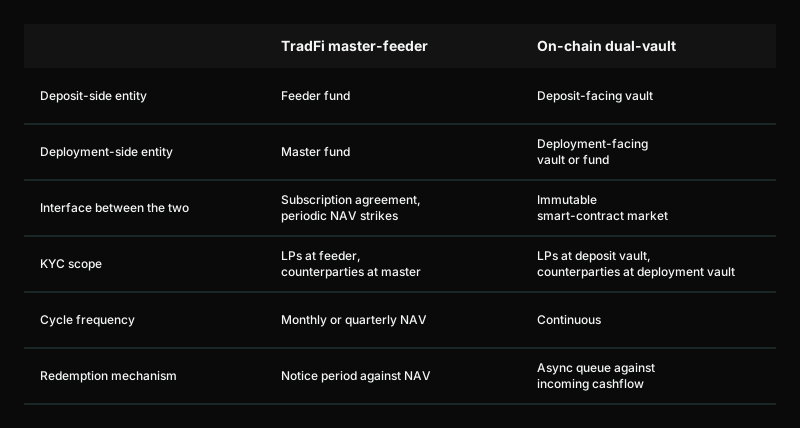
Traditional asset managers solved this problem decades ago with a master-feeder structure.
LPs subscribe into a feeder vehicle (the deposit-facing side). The feeder routes capital into a master fund (the deployment-facing side), which originates or buys the underlying loans. Cashflows from those loans return up to the master, get fee-adjusted at that level, and finally distribute down to feeder LPs.
Two legally separate entities. One continuous flow.
The reason for the separation isn't glamorous. Different LPs have different regulatory profiles, and a US tax-exempt pension can't subscribe through the same vehicle as a Cayman fund without triggering tax and reporting issues that neither side wants to inherit. Wrappers can't outrun regulation.
Compliance gates live on the feeder side. Underwriting and counterparty exposure live on the master side. The two sides share a defined interface and not much else.
On-chain lending borrowed the same shape with different building blocks. The cycle runs through a deposit-facing vault, which takes stablecoin from LPs and KYCs them when required. A deployment-facing vault or fund entity sits on the other side, drawing those stablecoins and responsible for what gets done with them.
Both sides plug into the same place. The two sides connect through an on-chain market with defined collateral, loan asset, oracle, and liquidation threshold. Some lending protocols lock those parameters at deployment (immutable, isolated markets); others let governance adjust them over time (shared pools). Either shape lets the deposit-facing and deployment-facing entities share a defined interface without exposing one to the other's risk.
The practical consequence isn't hard to see. The deposit-facing vault and the deployment-facing vault can be operated by different compliance teams, KYC different counterparties, and follow different governance, while still moving capital between them continuously. Same plumbing, faster cycle.
How Rekord runs the cycle
Rekord runs the cycle through two legally separate fund entities connected by a Morpho Blue market.
Step one: the deposit. An institutional LP completes KYC and subscribes through an async-deposit wrapper based on the ERC-7540 standard. The wrapper queues the deposit, batches subscriptions, and mints LP vault shares once the cycle closes. Stablecoins land in the LP-facing vault under bankruptcy-remote structuring, segregated from the platform operator's balance sheet and held with institutional-grade custody arrangements.
Step two: the supply. The vault supplies that capital into a curated set of Morpho Blue markets, each one purpose-built for a single collateral type. A curator sets the supply caps. An allocator bot executes rebalances within those caps.
Step three: the demand. Two distinct sources draw from those markets. On one side, Collateral Pledgers (foundation treasuries, validators, institutional crypto holders) post crypto and borrow stablecoins, without selling the underlying.
On the other side, an RWA-deployment fund draws stablecoins against tokenized representations of real-world assets that originators have submitted, scored through a 12-category Originator Risk Score, and onboarded through an independent compliance pipeline run by the deployment vault rather than the LP vault. KYC stays separate. Six RWA deal types feed it: Consumer Lending, SMB Acquisition, Luxury Asset, Trade Receivables, Project Financing, and CRED.
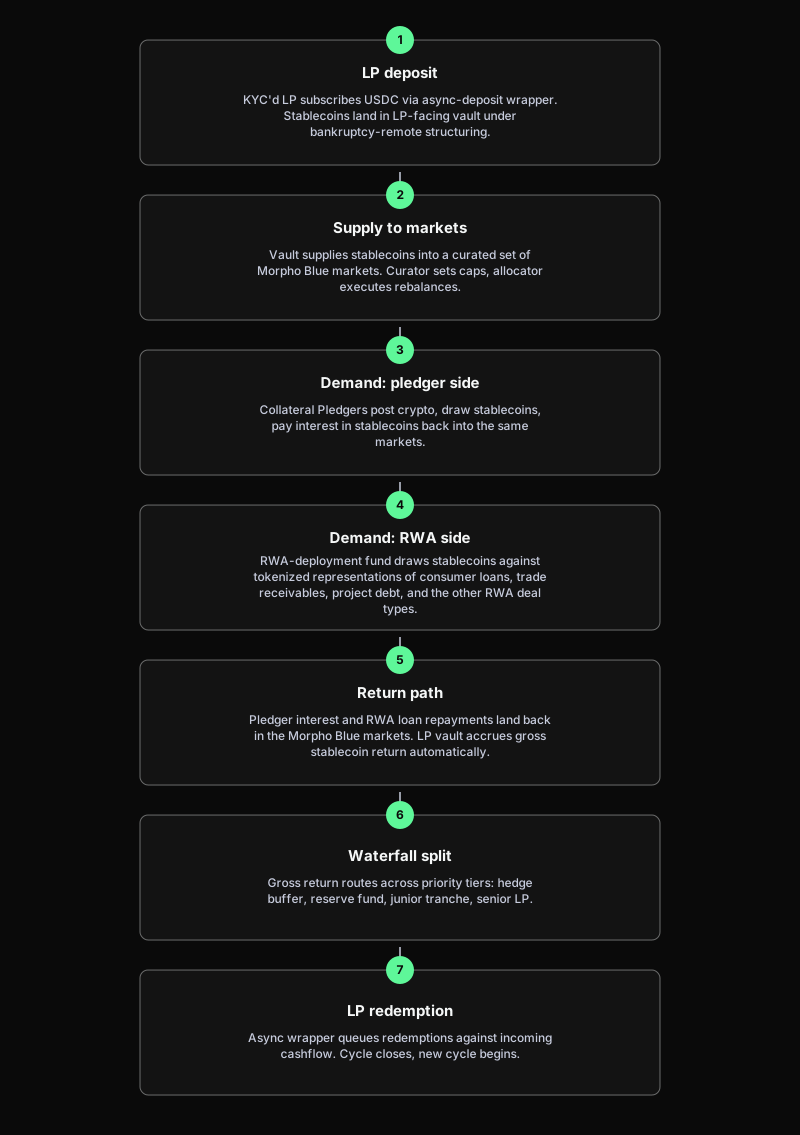
Step four: the return path. Crypto borrowers pay interest in stablecoins as their loans accrue. RWA deals repay principal and interest as the underlying credit amortizes. Both streams land in the same Morpho Blue markets the LP vault's supplying, so the vault accrues the gross stablecoin return automatically, without any manual settlement step needed in between cycles. Settlement's continuous.
Step five: the split. Gross return doesn't pass through to LPs untouched. The waterfall routes it across priority tiers: a hedge buffer that funds the options absorbing crypto drawdowns, a reserve fund that absorbs deal-level losses, a junior tranche that takes first loss, and finally senior LP capital at the top of the stack. For specific tier percentages, contact the capital markets desk.
Step six: the redemption. When an LP wants out, the async wrapper queues the redemption against incoming cashflow. The position closes as cash arrives, with no forced sale of underlying deals to fund a redemption window.
Long-duration deals continue to amortize on their own schedule. If LP exit demand exceeds available cashflow in a window, the redemption gate slows withdrawals until cycles close and reserves refill.
The full loop runs continuously. This week's interest funds next week's draws. Capital from a maturing project finance deal next quarter funds outstanding redemptions.
The two-fund separation, the Morpho Blue interface, and the waterfall layer together do what a TradFi master-feeder does in paperwork, programmatically, and on a much tighter cycle.
What this changes for an LP
What an LP buys is exposure to the cycle itself.
The deposit joins a pool that supplies multiple Morpho Blue markets simultaneously, sees multiple return streams reconcile through the same waterfall, and pays whatever's left after the priority layers take their share. The pool's the unit of exposure. No single deal, no single borrower, and no single counterparty drives the pool's return in isolation.
Three things follow.
Your subscription gets KYC'd once, by the LP vault. The deployment side does its own KYC on borrowers and counterparties, separately. You're never the underwriter of a specific position.
Returns track pool composition. The curator adjusts the mix between crypto-collateral demand and RWA deployment over time, and the waterfall tier definitions set how gross return splits before it reaches you. The blended result's what shows up in the LP statement.
Exit happens through a queue against incoming cashflow. Long-duration RWA deals continue to amortize on their own schedule. Knowing this in advance saves you the wrong assumptions about liquidity timing.
For deeper reading, see The dual-fund structure and Crypto-collateral lending as a yield source.