
What Is a Real-World Asset? RWA Lending vs DeFi Yield
What is a real-world asset (RWA), and how RWA lending differs from DeFi yield
The concept, in plain language
A real-world asset (RWA) is any off-chain instrument represented on-chain through a token or claim. RWA lending deploys on-chain stablecoin capital against those instruments, and the yield comes from real-economy cashflow. That's the structural break from purely on-chain DeFi yield.
The off-chain thing is what you'd expect: a consumer loan from a regional lender, a trade invoice owed by a rated corporate, a piece of real estate, a treasury bill, a luxury watch, an energy project halfway through construction. Anything that produces cashflow can qualify. The on-chain thing is a token that records who owns the economic interest and routes the cashflows when they arrive.
RWA lending takes that one step further.
Capital pooled on-chain (typically stablecoins) gets deployed against off-chain credit instruments. A borrower in the real economy receives that capital, pays interest from real-economy cashflow, and the lenders earn returns denominated in stablecoins paid out on the schedule of the underlying instruments.
The interesting part is what sits off-chain.
The borrower is a small business looking for working capital, a consumer paying down an installment plan, or a corporate buyer of inventory financing its next shipment, and the credit decision sits with the originator who knows that borrower's history. It's all off-chain. Defaults route through legal claims against the counterparty, with recovery handled through workout, asset seizure, or sale of the underlying loans.
Yield tracks whether the real-economy borrower repaid this month, paced by collection cycles, default rates, and instrument maturities.
How RWA lending works compared to DeFi yield
Strip away the protocol details and DeFi yield has one shape. Someone posts crypto, borrows stablecoins against it, and pays interest. The lender earns that interest.
If the crypto drops below a defined threshold, the position liquidates and the lender's repaid from seized collateral. Everything happens on-chain, in seconds, against on-chain spot markets. See What is a lending protocol for the underlying machinery.
RWA lending has a different shape.
An originator owns or services a book of off-chain credit (consumer loans, factored invoices, infrastructure debt). They're looking for financing against that book. Capital is raised through a tokenized vehicle, usually a bankruptcy-remote SPV that holds the underlying loans and issues tokens to on-chain investors representing pro-rata claims on the cashflows produced by the underlying instruments.
On-chain capital buys those tokens. The originator collects from the underlying borrowers, remits to the SPV, and the SPV pays the token holders. The cashflow is real-economy money, denominated in dollars, settled on whatever schedule the underlying instruments produce.
The yield exists in both models. What differs is where it's coming from and what determines whether it shows up at all.
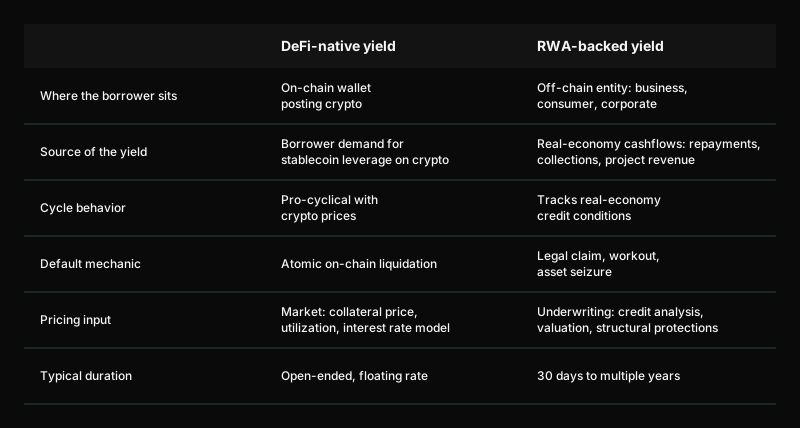
Some of these distinctions soften at the edges. RWA tokens can still face on-chain markdowns when underlying collateral repays slowly or defaults at scale. DeFi-native positions can be hedged through derivatives.
The honest framing is that the two yields draw from different pools of cashflow, and a portfolio combining both produces a return profile neither one delivers alone.
That's why most institutional RWA platforms run both. See Crypto-collateral lending as a yield source in diversified pools for the pro-cyclical side.
How Rekord implements RWA lending
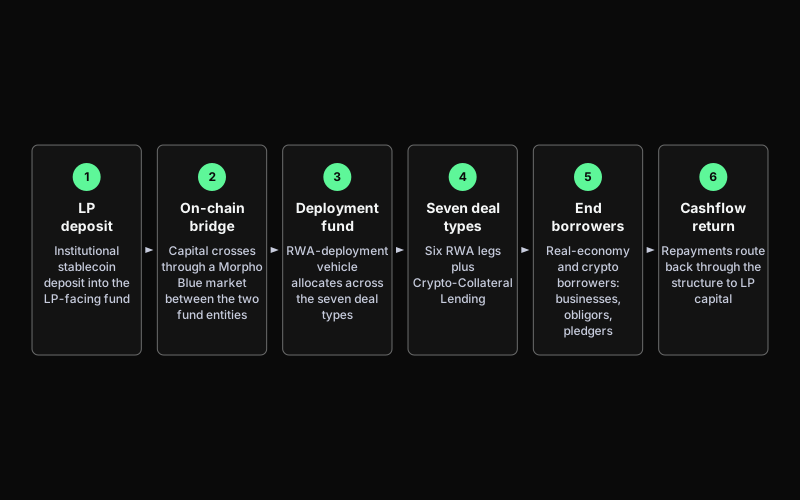
Rekord runs seven deal types into a single pool architecture. Six are real-world credit. One is crypto-collateral.
They share infrastructure and a common scoring model.
The six RWA deal types each carry their own underwriting logic and cashflow shape:
Consumer Lending. Portfolio acquisition of existing consumer loan books from originators. High volume, short-to-medium duration, weekly collection cadence. Statistical portfolio defaults modeled at the book level.
SMB Acquisition. Rekord-originated loans that finance a buyer's acquisition of a small business. Dual-side underwriting against business cashflow and buyer credit. Enterprise value of the acquired business sits as collateral.
Luxury Asset. Lending against exotic cars, watches, and art. Illiquid collateral, valued at Forced Liquidation Value (FLV).
Trade Receivables. Invoice financing against rated, credit-insured corporate obligors. Short duration (30 to 120 days), high volume, revolving facility structure.
Project Financing. Long-duration infrastructure and energy debt. Milestone-gated draws during construction, interest capitalized from reserve, cashflow begins at commercial operation.
Commercial Real Estate Development (CRED). Construction and development lending where the collateral value is forward-looking. Cashflow ties to an exit event such as sale, refinance, or lease-up.
The seventh, Crypto-Collateral Lending, sits alongside the RWA legs and is modeled as a synthetic instrument within Rekord's pool architecture. That's deliberate. A pool that blends pro-cyclical crypto-collateral returns with the counter-cyclical RWA legs smooths the overall return profile.
Each deal is screened at origination through a 12-category Originator Risk Score and then rescored continuously via a Deal Risk Score, both producing numbers on a 0-10 scale that lets the pool blend exposures across very different deal types on a comparable basis. Concentration and correlation adjustments apply at the pool level. Vaults aggregate pool scores with allocation weights.
The dual-fund structure separates the LP-facing entity from the deployment entity legally. The LP fund KYCs its depositors and holds stablecoins through a qualified custodian. The deployment fund KYCs the counterparties on the other side.
The two connect through a Morpho Blue market that serves as an arm's-length on-chain bridge. See The dual-fund structure: why institutional RWA protocols use two entities for the legal mechanics.
Tokenized RWA collateral gets priced on-chain through a NAV oracle that computes token value as a risk-adjusted present value of underlying loan cashflows, with prices updated as new servicing data arrives from the originator. Stale data triggers a halt.
Specific LTV thresholds, concentration limits, and reserve sizing live in the diligence materials. For current parameters, contact the capital markets desk.
What changes for an LP
An LP looking at a Rekord pool sees one return stream. Underneath that single number sit seven independent cashflow engines, six drawing from the real economy through consumer loans, business acquisitions, luxury collateral, trade invoices, project debt, and real estate development, with one drawing from crypto-collateral demand. The mix is the product.
What you're buying is exposure to RWA returns without the operational lift of underwriting deals directly. What you accept in exchange is that the curator sets the mix, and the mix moves as cashflow conditions shift across deal types. You can't pin yourself to 100% trade receivables in a given month.
If you want pure on-chain crypto-collateral exposure, a generic DeFi lending protocol is where to go. If you want blended real-economy credit with crypto-collateral returns layered in, the pool model fits.
For the full capital cycle, see The capital cycle: how stablecoin deposits become real-world returns. For the originator side, see What is an originator.